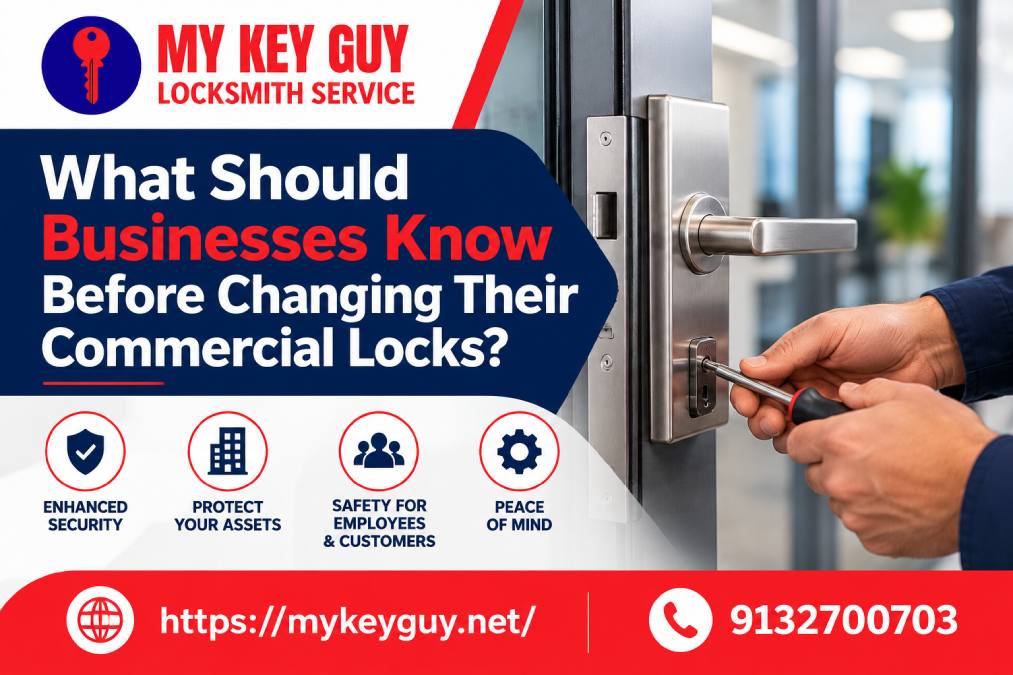
A manager quits on bad terms. A key ring goes missing. You sign a new lease and have no idea who still has keys. Each of these moments raises the same question: should you change your locks?
A commercial lock change Kansas City businesses plan is not the same as swapping a lock at home. Business doors get heavier use, stricter safety rules, and more people who need access. A little planning keeps your building secure, your staff working, and your doors legal.
Key Takeaways
- Businesses are real targets: About 37% of U.S. burglaries in 2019 hit stores, offices, and other business sites.
- Most burglaries use force: 55.7% of burglaries in 2019 involved forcible entry.
- Each burglary costs money: The average loss per burglary was $2,661 in 2019.
- ADA rules apply to hardware: Door hardware must work with one hand, without tight grasping, pinching, or twisting of the wrist.
- Height and force limits matter: Hardware must sit 34 to 48 inches above the floor, and operable parts can need no more than 5 pounds of force.
- Rekeying is often enough: If your locks are in good shape, rekeying cuts off old keys for less.
When Should a Business Change Its Locks?
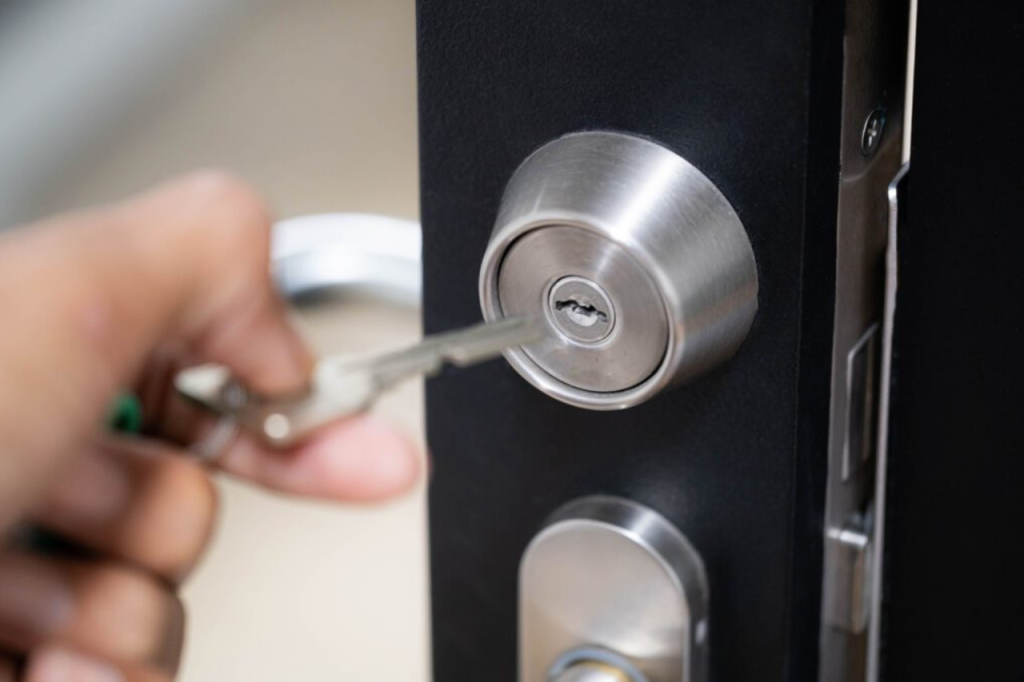
Most businesses should rekey or change locks when:
- An employee leaves, especially a manager or keyholder.
- Keys are lost, stolen, or missing.
- You move into a new space or sign a new lease.
- There has been a break-in or attempted break-in.
- Locks are worn, sticky, or failing.
- You are upgrading to a master key or access control system.
If you cannot say for sure who has a key to your building, it is time to act. Businesses are not immune to break-ins. FBI burglary data shows that more than a third of burglaries in 2019 hit businesses and other non-home sites.
Rekey, Replace, or Upgrade?
Changing locks does not always mean buying new hardware. The right choice depends on the shape of your locks and how much control you need.
Option | What It Does | Best For | Cost Level |
Rekeying | Changes the pins so old keys stop working | Good locks, lost keys, staff turnover | Lowest |
Lock replacement | Installs new locks and keys | Damaged, worn, or low-grade locks | Medium |
Master key system | One key opens many doors, others open only some | Offices with several rooms or levels of access | Medium |
Restricted keyway | Keys that cannot be copied without authorization | Businesses that need tight key control | Medium to high |
Access control | Cards, fobs, or codes instead of keys | Busy sites, high turnover, sensitive areas | Highest upfront |
Our lock rekeying service is often the fastest and most budget-friendly fix. When hardware is worn or damaged, a full commercial lock change Kansas City businesses schedule may be the better long-term choice.
Check Your Lease Before You Change Anything
If you rent your space, your lease may limit what you can do. Many commercial leases say:
- The landlord must approve lock changes.
- The landlord must receive a copy of the new key.
- Certain doors, like shared entries, belong to the building.
- Fire and life safety hardware cannot be altered.
Read your lease or talk to your property manager first. Skipping this step can lead to fights, fees, or trouble in an emergency.
Know the Safety and ADA Rules
Business doors follow codes that do not apply to most homes. A pro should know these rules before touching your hardware.
1. ADA Requirements
The Americans with Disabilities Act sets clear rules for door hardware in public spaces and businesses. As explained by I Dig Hardware, the 2010 ADA Standards say:
“Operable parts shall be operable with one hand and shall not require tight grasping.” 2010 ADA Standards for Accessible Design
That is why most commercial doors use lever handles, not round knobs. Hardware also needs to sit between 34 and 48 inches above the floor.
2. Fire Code and Free Egress
People must be able to exit a building quickly in an emergency. On many commercial doors, that means:
- No key or special knowledge needed to exit from the inside
- Panic bars or exit devices on certain doors
- No added deadbolts or chains that block exits
A lock that blocks a quick exit puts people at risk and can break the law. Always check with a qualified locksmith or your local fire marshal before changing exit doors.
Choose the Right Lock Grade
Business doors open and close hundreds of times a day. Home locks are not built for that.
- Grade 1: The highest ANSI/BHMA rating. Built for heavy commercial use and the best choice for main entries.
- Grade 2: Good for light commercial doors, like interior offices.
- Grade 3: Basic residential use. Not suited to most business doors.
Many businesses use Grade 1 hardware on exterior doors and Grade 2 on interior rooms.
Plan Key Control Before You Cut Keys
New locks will not help if keys get copied and handed out again. A key control plan keeps your security in place.
1. Build a Key Log
Track who holds each key, which doors it opens, and when they got it. Ask staff to sign for keys and return them when they leave.
2. Use a Master Key System
A master key system lets managers open every door while staff open only the rooms they need. It means fewer keys floating around.
3. Choose Restricted Keys
Restricted keys use special blanks that only approved locksmiths can cut. Staff cannot copy them at a hardware store.
Pro tip: Stamp keys with a code number, not the door name or your business address. If a key is lost, no one can tell what it opens.
Plan the Timing to Avoid Downtime
A well-planned commercial lock change Kansas City shops book causes little downtime. Think about:
- Time of day: Schedule work before opening, after closing, or on a slow day.
- Number of doors: Make a list of every lock, including back doors, storage rooms, and file cabinets.
- Staff notice: Tell employees when keys will change and how to get new ones.
- Key handoff: Have new keys ready before old ones stop working.
What About Access Control?
If you change locks often due to turnover, access control may save you money over time. Instead of rekeying, you simply turn off a card or code.
Many Kansas City businesses use a mix. They put access control on main doors and key rooms, and Grade 1 keyed locks on the rest. Our commercial locksmith team can help you plan the right balance.
Common Mistakes Businesses Make
Avoid these errors when changing commercial locks:
- Changing only the front door and forgetting back or side doors
- Using cheap residential locks on busy commercial doors
- Putting in hardware that blocks a quick exit or fails ADA rules
- Skipping landlord approval on leased spaces
- Handing out new keys with no tracking
- Waiting weeks after a key goes missing
How My Key Guy Can Help
My Key Guy is a locally owned, licensed, and insured locksmith serving businesses across Kansas City, Missouri, and Kansas. Every commercial lock change Kansas City clients book with us starts with a walk-through of your doors.
Our team can:
- Rekey or replace locks on every door
- Install Grade 1 commercial hardware
- Set up master key and restricted key systems
- Work after hours to keep your business running
- Give a clear price before any work begins
Need a full lock swap? Our lock change service covers storefronts, offices, warehouses, and more.
Frequently Asked Questions
Should a business change its locks when an employee leaves?
Yes, if that person had a key and did not return every copy. Rekeying is a fast, low-cost way to cut off access.
Is rekeying cheaper than changing commercial locks?
Usually, yes. Rekeying only changes the pins, while replacement means new hardware. If your locks are worn or low grade, replacement may be worth it.
Do I need my landlord's permission to change locks?
Often, yes. Most commercial leases require approval and a copy of the new key. Check your lease before scheduling work.
What is a master key system?
It is a lock setup where one key opens many doors, while other keys open only certain doors. It helps businesses control who can enter each area.
Can a locksmith change commercial locks after hours?
Yes. Many locksmiths offer early morning, evening, or weekend service to avoid disrupting your business.
What lock grade should a business use?
Grade 1 is best for exterior and high-traffic doors. Grade 2 works well for many interior office doors.
Final Thoughts: Change Locks With a Plan
Changing commercial locks protects your business, your staff, and your customers. But the best results come from a clear plan: check your lease, follow safety codes, choose the right grade, and control who gets keys.
For a smooth, code-aware commercial lock change Kansas City businesses can count on, call My Key Guy. We work around your schedule and leave every door secure.
Ready to secure your business? Call (913) 270-0703, email mykeyguykc@gmail.com, or request a free estimate today.